Comparison Analysis
The Fast Food Revolution: 2026
By 2026, the fast food industry has been fundamentally re-engineered. The “Burgers vs. Fries” debate of the past decade has evolved into a complex rivalry of robotic efficiency, molecular culinary arts, and biometrically-aware menus. McDonald’s and Burger King remain the undisputed titans, but their status as “GOAT” contenders is now measured by their ability to integrate into the modern consumer’s digital lifestyle.
This comparison explores the 2026 landscape of these two iconic brands, examining how they’ve transitioned from legacy fast food into high-tech nutritional providers.
McDonald’s 2026: The Efficiency Engine
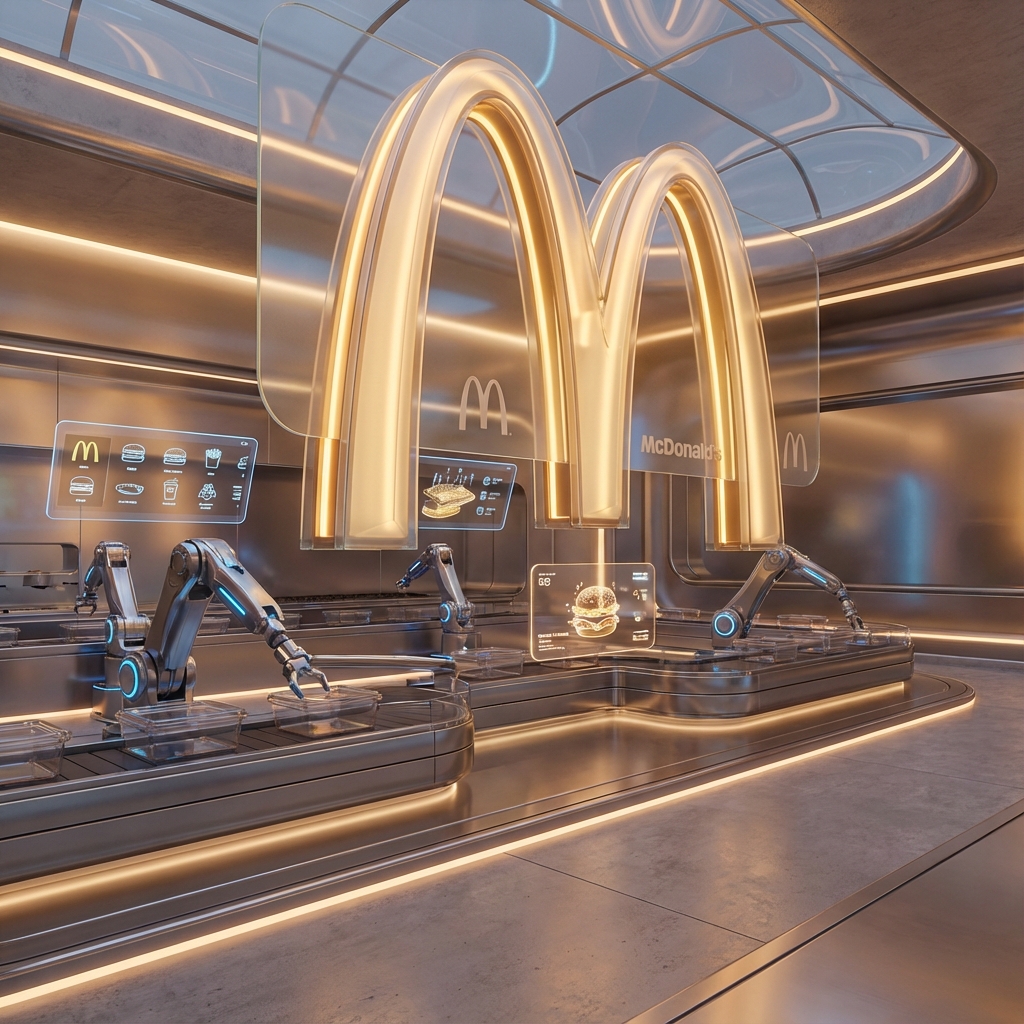
McDonald’s strategy for 2026 is defined by “Level 4 Automation.” In most major urban centers, the “Mcdonald’s of the Future” is a compact, highly efficient hub where 90% of the kitchen operation is handled by specialized robotic arrays. This isn’t just about labor costs; it’s about surgical precision. By 2026, every Big Mac is constructed with a variance of less than 0.1 grams, ensuring that the “McDonald’s taste” is identical whether you are in Chicago or Seoul.
The heart of McDonald’s 2026 dominance is Menu-Gen v5, its AI-driven personalization layer. When you approach a kiosk or open the app, the menu isn’t static. It adjusts in real-time based on your recent health-wearable data (if opted-in), suggesting high-protein variants or lower-sodium options if your smartwatch indicates a heavy workout or a need for recovery. McDonald’s has successfully shifted its image from “junk food” to “precision fuel,” making it the default choice for the busy, data-conscious consumer.
Burger King 2026: The Flame Sovereign
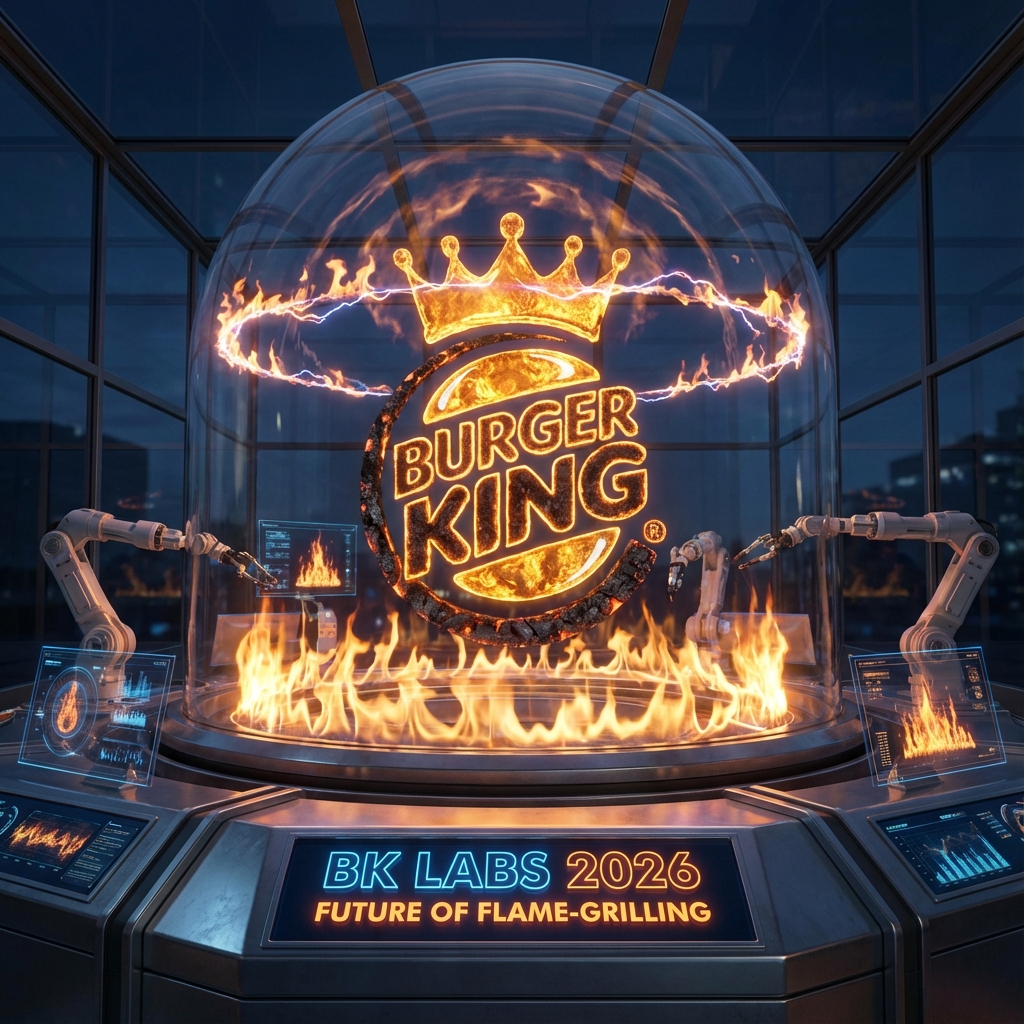
While McDonald’s focused on the “how” of delivery, Burger King doubled down on the “why” of flavor. Their 2026 initiative, “The Future of Flame,” has introduced robotic broilers that use proprietary laser-charcoal technology to mimic the exact thermal profile of a traditional flame grill. This provides the signature Whopper char with 100% consistency and 50% less energy consumption.
Burger King’s 2026 edge is its Culinary Flexibility. While McDonald’s is a master of the “standardized unit,” Burger King’s Royal-Taste AI allows for unprecedented customization. In 2026, “Have It Your Way” means you can adjust the smokiness of your burger, the thickness of the patty, and the exact spice level of your sauce using a digital slider. For the 2026 consumer, Burger King is the “premium” alternative in the fast-food space—the choice for someone who wants the soul of a barbecue with the speed of a startup.
Lab-Grown and Plant-Based: The 2026 Reality
By 2026, the “Meat War” has stabilized. Both brands have reached Stat Parity in their alternative protein offerings. McDonald’s “McPlant 2.0” uses a hybrid fermented-protein that is nutritionally superior to traditional beef, while Burger King’s “Impossible Flame” remains the fan-favorite for those seeking the most convincing “meat-like” experience. In 2026, choosing the non-animal option is no longer a compromise; for many, it’s the premium version.
Sustainability: The Net-Zero Drive
McDonald’s is winning the logistics battle. Its 2026 supply chain is 70% localized, with vertical farms located near distribution centers in some regions to provide the world’s freshest lettuce and tomatoes year-round. Burger King has focused on packaging innovation, debuting the “Bio-Wrap”—a 100% edible (though usually composted) packaging material derived from seaweed that dissolves in water within minutes.
The App Ecosystem: 2026 Rewards
The “App-First” era is in full swing. In 2026, the McDonald’s app acts as a Financial Wallet and Health Tracker hybrid for its most loyal customers. Burger King has leaned into Gaming and Gamification, with its “Keep the Crown” AR game allowing users to earn digital collectibles and real-world discounts by visiting different locations and participating in “Flame-Grill Challenges.”
FAQ: Fast Food GOAT Questions
Is the food healthier in 2026? Significantly. Due to AI-optimized cooking and cleaner ingredient sourcing, the “ultra-processed” label is beginning to fade. Both brands now offer high-transparency nutritional data and fewer synthetic additives than they did in 2020.
Do people still work at McDonald’s? Yes, but the roles have changed. In 2026, McDonald’s employees are “Experience Leads” and “System Technicians,” focusing on customer service and robotic maintenance rather than manual fry-dipping.
Does Burger King still ‘flame-grill’? Yes, but the technology has evolved. The robotic flame-grillers of 2026 use a combination of real fire and infrared precision to ensure the flavor is authentic without the carbon footprint of traditional gas grills.
Which one is cheaper? Price parity is common in 2026. However, McDonald’s often wins on the “Value Bundle” side, while Burger King positions itself as the “Premium Experience” within the fast-food tier.
Final Verdict: Logic or Emotion?
The choice between McDonald’s and Burger King in 2026 comes down to what you prioritize in your meal.
Choose McDonald’s for the Ultimate Logical Choice. It is for the person who wants precision-engineered food that syncs with their health goals and fits perfectly into their high-speed life.
Choose Burger King for the Ultimate Sensory Choice. It is for those who refuse to compromise on the primary instinct of flavor—the smokiness of the flame and the ability to customize every bite to their exact whim.
The fast food GOAT title remains a tie: McDonald’s is the GOAT of the Platform, while Burger King is the GOAT of the Patty.
Industry data and market cap projections are speculative and based on 2026 fast-food roadmaps.